Controlled synthetic-data package
Microscopy observations, exact labels or targets and metadata produced by a generator calibrated across an agreed specimen–instrument–acquisition domain.
How data generation worksFrom physical simulation to deployable scientific measurement
NeuralSoftX builds controlled synthetic datasets from calibrated generators, trained models, scientific software and complete instrument-specific workflows for electron microscopy.
For microscope developers, scientific-software teams and industrial laboratories that need reliable results beyond standard analysis tools.
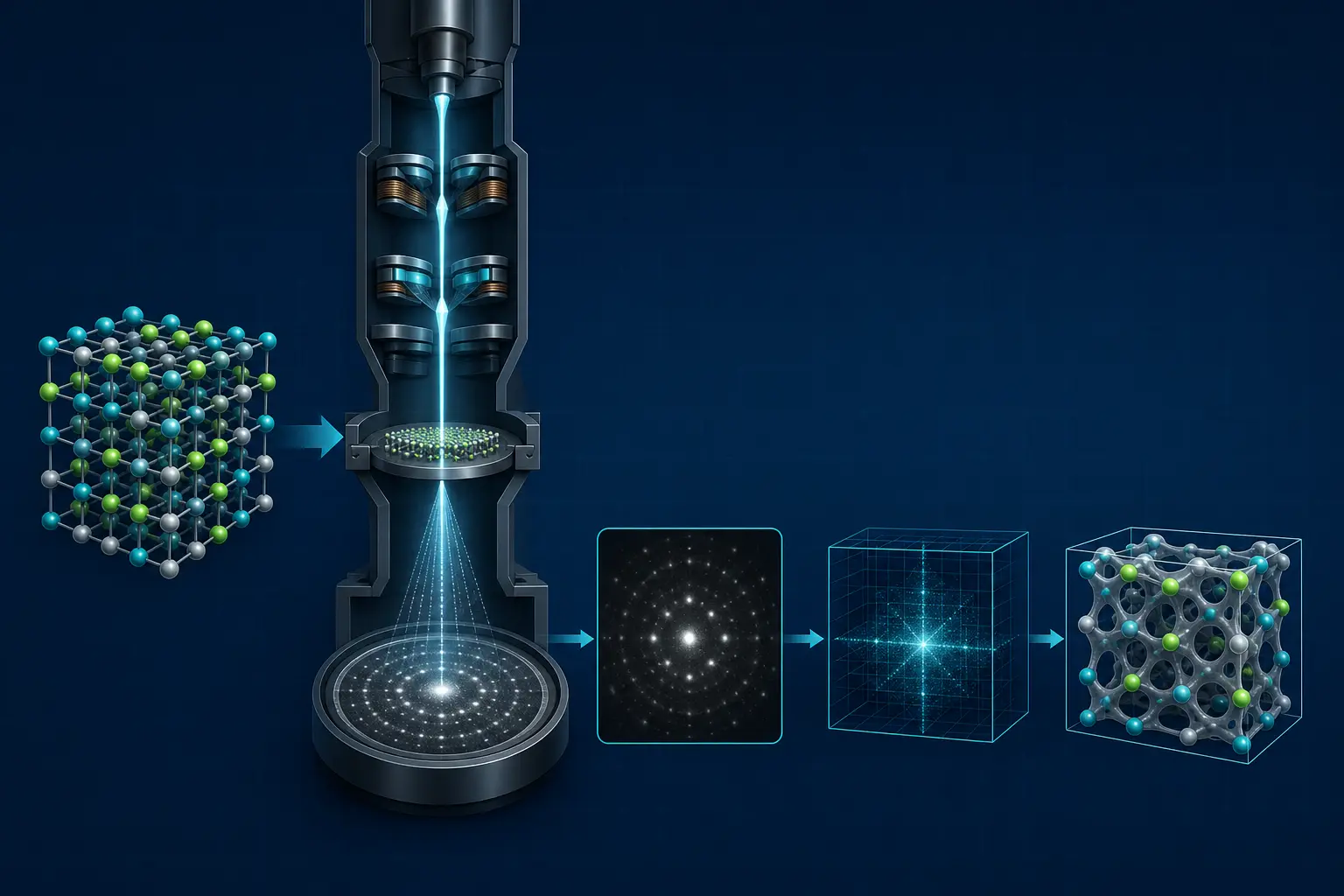
What you can buy
Choose one component or commission the complete workflow. Every delivery states its supported operating domain, validation evidence and known limits.
Microscopy observations, exact labels or targets and metadata produced by a generator calibrated across an agreed specimen–instrument–acquisition domain.
How data generation worksTask-specific weights, executable inference, deployment variants, validation evidence and documented applicability limits.
Training and model selectionClassical, neural or hybrid software for correction, registration or quantitative analysis. New tomography, ptychography and phase-recovery systems are scoped as development partnerships while their validation continues.
Reconstruction capabilitiesGenerator, data, solution development, experimental validation, review tooling, integration and handover delivered as one controlled system.
See the complete workflowProblems NeuralSoftX solves
The strongest fit is a repeated, high-value workflow with representative experimental data, a clear decision criterion and an expensive technical bottleneck.
Generate controlled observations and exact targets when experimental pairs are expensive, subjective or physically unobservable.
Synthetic data and simulationDefine and validate the supported microscope, detector, specimen, signal and acquisition domain instead of assuming visual similarity is sufficient.
Instrument-specific developmentRestore, register or reconstruct low-dose images, distorted scans, focal series, tilt series and diffraction measurements using task-appropriate inverse methods.
Correction and reconstructionLocalise, segment, prioritise or quantify particles, defects, phases and other defined structures with review and failure handling built into delivery.
Measurement and analysisPackage the accepted method for the required CPU or GPU, image size, latency, memory, confidentiality and integration environment.
Deployment and handoverBenefits to your organisation
The objective is not a convincing demonstration. It is a reproducible method that supports the required decision under real acquisition and deployment constraints.
Use controlled synthetic targets to reduce dependence on manual annotation or unavailable experimental truth.
Receive documented specimen, instrument, acquisition and deployment coverage with explicit failure and out-of-domain analysis.
Automate defined restoration, reconstruction or analysis stages while retaining review paths for uncertain or exceptional cases.
Support local, offline or on-premise execution when raw experimental measurements must remain in the client environment.
How a project moves
The commercial process stays understandable at this level. The detailed scientific workflow, evidence separation and model-development options are available on the Expertise page.
Agree the required measurement, operating domain, constraints and acceptance criteria.
Calibrate the generator, produce controlled data and establish classical or physical references.
Compare suitable classical, neural and hybrid candidates, then test held-out experimental measurements.
Package the selected solution with operating limits, validation results and handover material.
Ways to engage
The scope depends on the existing evidence, required coverage and whether new simulation, algorithms, training or integration are needed.
A concrete existing package used within its stated evidence domain, where its ownership and licence permit delivery.
Existing NeuralSoftX-controlled technology adapted and validated against a client's representative measurement domain.
New generators, inverse methods, architectures, interfaces or integrations for a previously unsupported problem.
Technology in active development
NeuralSoftX is independently developing and packaging complete tomography and electron-ptychography workflows, together with a neural exit-wave reconstruction system.
These capabilities can be discussed for development partnerships and remain separate from validated off-the-shelf delivery.
See development status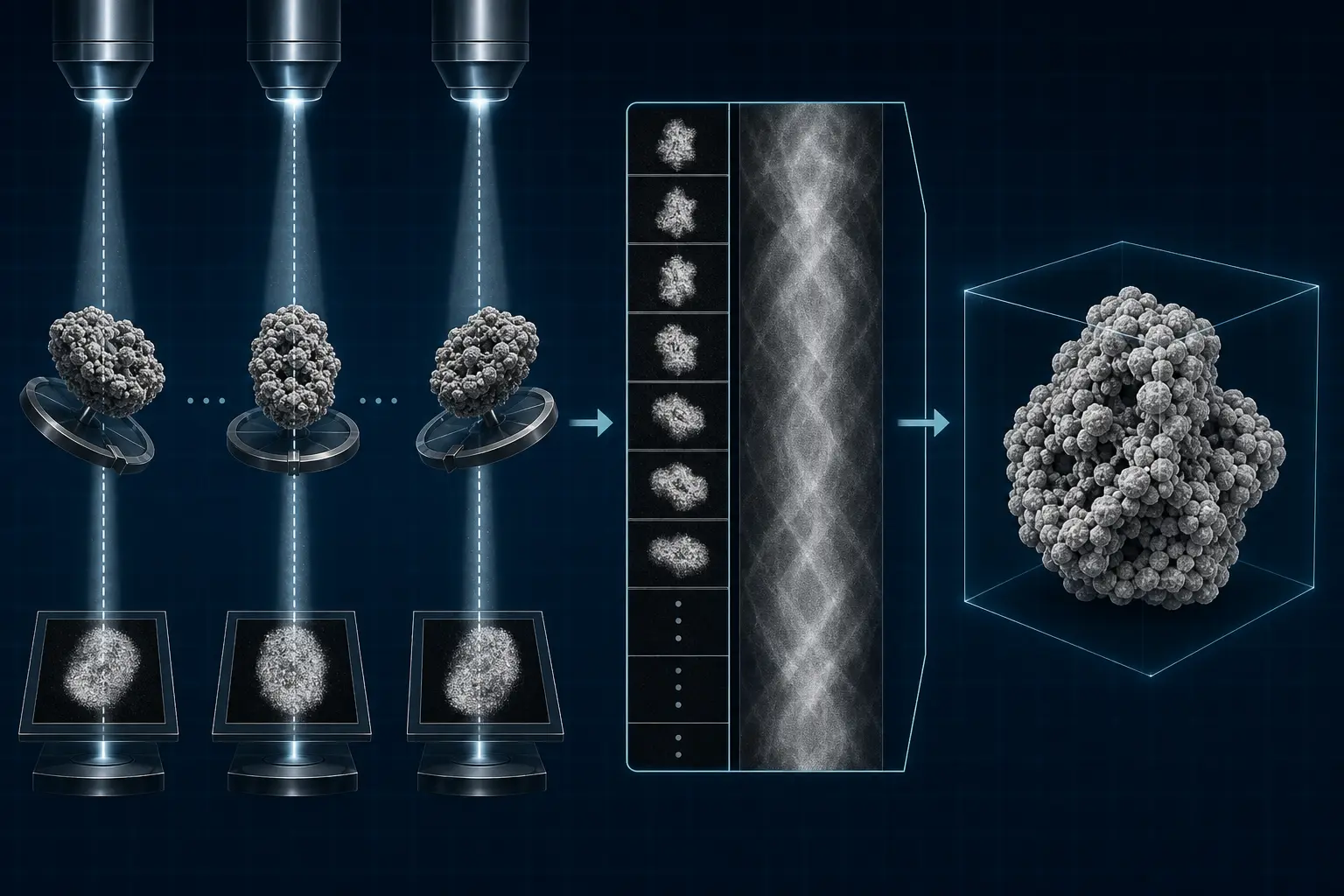
Selected evidence
Open-source software, peer-reviewed computational methods and industrial delivery experience support the work without turning previous institutional research into a company-owned claim.
C++/CUDA multislice simulation for electron diffraction, imaging and spectroscopy, used as a foundation for simulation-backed method development.
View on GitHubPublished simulation-trained single-shot restoration across SEM, STEM and TEM with deployable ONNX inference.
View on GitHubA learned surrogate for real-time ADF-STEM scattering-cross-section prediction within a defined parameter range.
View on GitHubStart with the measurement